




Being well-dressed without being overdressed. That is one of the greatest challenges facing the modern gentleman. It is, of course, about choosing a wardrobe that makes you feel comfortable. About not being excessively smart or standing out too much. And the role of the modern gentleman requires both self-respect and consideration for those around him.
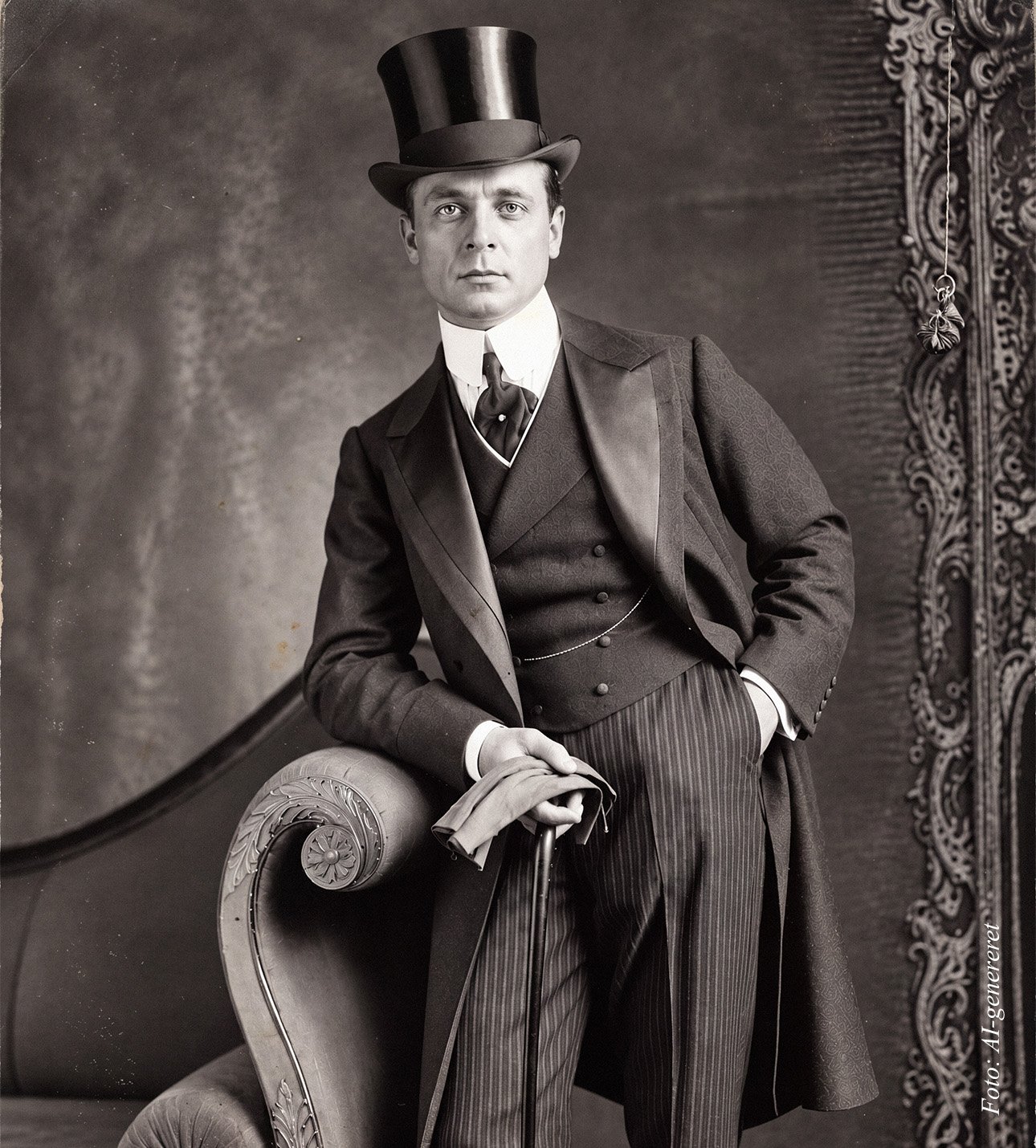
There was a time when a man did not have to climb very far up the social ladder before it became unthinkable to leave home without a jacket, waistcoat and hat. A pocket watch hung from a chain across his waistcoat, his shirt was starched, and a tie was not a matter of mood but part of the uniform. Today, the dress code has all but disappeared. Workwear can easily consist of a pair of pre-washed jeans, a creased T-shirt and a pair of sneakers.
But that only makes the challenge greater for the modern gentleman. How do you dress elegantly without looking like a man on his way to a costume party?
The answer may be simpler than you might think. The modern gentleman does not necessarily own more clothes. He owns better clothes. And above all, he knows when not to wear them.
According to Mikkel Venborg Pedersen, senior researcher at the National Museum of Denmark, being a gentleman is not simply about the clothes you choose. “To a great extent, it is a question of your inner moral code. If we look back at the period from the mid-19th century through to the 1960s, the concept of the ‘gentleman’ was very much a question of honour. Of living an honourable life. Being tactful and considerate of others,” he explains.
That is why a respectable gentleman dressed appropriately when invited to a dinner party. It showed respect for the effort the host had put into preparing the dinner and setting the table. The uniform – jacket, waistcoat and tie – was a sign of appreciation. And it was not only a requirement for the aristocracy or upper middle classes. “The craftsman, too, would change out of his work clothes and into a waistcoat and shirt on Sundays. The top hat was replaced by a bowler – and later by a soft hat. A collarless shirt would be fitted with stiff detachable collars so that he could present himself appropriately when going into town,” says Mikkel Venborg Pedersen.

From Uniform to Personal Style
The classic men’s wardrobe of the time was hardly characterised by dramatic variations in design. The dark jacket signalled that you were out among other people. The hat completed the silhouette. The tie showed that you took the occasion seriously. The modern man has been given far greater freedom, although many of the norms of the past still remain. A man in 2026 may well go to work in sneakers, attend dinner in a knitted sweater and go to a reception in a suit without a tie, but there are still certain conventions we observe. Turning up to a funeral in a large floral Hawaiian shirt, for example, is hardly customary.
Over the years, however, the idea of the well-dressed gentleman has undergone its share of changes. “Not least the period following the two world wars gave men greater freedom, although they continued to live within established social norms. Industrialisation also gave other social groups the opportunity to dress well. In particular, the period after the Second World War and up until the youth rebellion of the late 1960s created more room for individual choice and genuine breaks with convention,” explains Mikkel Venborg Pedersen.
Quite simply, we have become less conformist. And we allow the individual greater freedom of expression. This is where style differs from fashion. Fashion is about what is new. Style is about knowing what works – and why.
The modern gentleman can therefore easily own a navy suit, a white shirt, a pair of black Oxford shoes and a classic watch. But he does not necessarily have to wear them all at once.
Jan Rem, store manager at Kaufmann Hillerød, has also noticed the more informal approach to the well-dressed gentleman. “There are still some classic choices made by the slightly more conservative man: the blue suit, the simple, tasteful tie, the white shirt. They help give a person credibility and presence.”
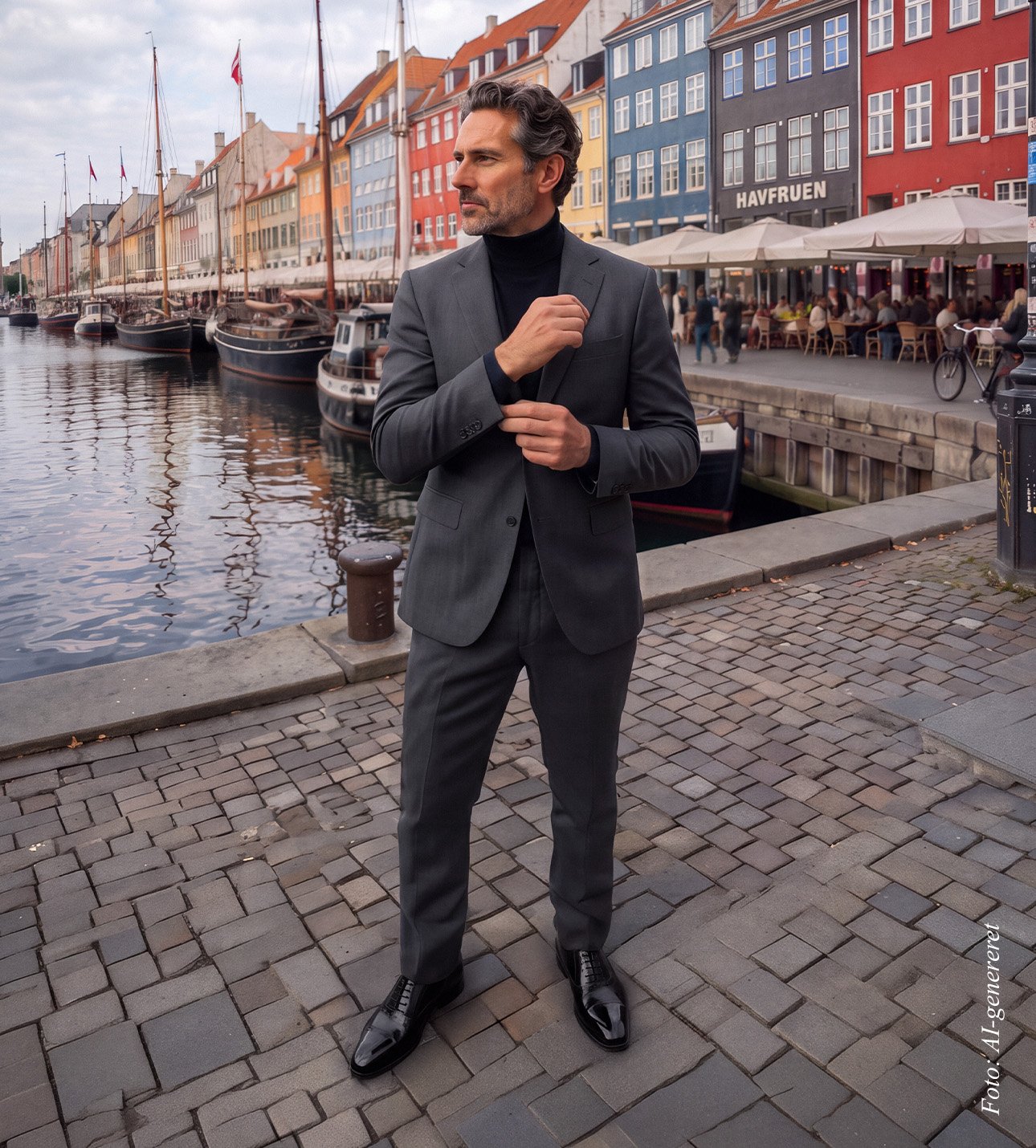
He has worked in the industry for almost 40 years. From the pastel-coloured suits with shoulder pads of the 1980s to the modern overshirts we see today. “We have become a little more ‘loose’ in our style choices. We still buy suits, of course, but we mix them with jeans. And the jacket might be replaced by an overshirt, available in everything from cotton to leather. We can also maintain a well-dressed look even when the shirt is replaced by a roll-neck sweater,” explains Jan Rem.
The Tailor Is the True Luxury
But the modern well-dressed man still depends on a certain degree of self-respect when choosing his outfit. Or at least a certain degree of self-awareness. An expensive suit that hangs poorly on the body is not elegant. A less expensive suit that has been properly tailored can be quite the opposite.
So perhaps the tailor is the modern gentleman’s most important luxury. And perhaps this is precisely where the modern gentleman differs from his counterpart of the past: he does not need to demonstrate his wealth.
There are, however, things that have disappeared over time: the pocket watch and its chain. It has been replaced by the wristwatch, which today is the classic man’s most personal accessory. And the hat is perhaps the most interesting symbol of the modern gentleman’s dilemma. A classic fedora, Panama hat or flat cap can add personality to a wardrobe. But it requires confidence and, above all, the right occasion.
And then, of course, we have done away with the pastel-coloured jackets and narrow leather ties of the 1980s. While the hat, waistcoat or even a double-breasted suit jacket may enjoy a renaissance at some point in the future, Mikkel Venborg Pedersen does not believe that pastel-coloured suits and narrow black ties are something we are likely to see again.
It is probably fair to say that a true gentleman is no longer synonymous with a Victorian gentleman. The colours are more subdued. The modern man’s wardrobe does not have to be black or dark. Quite the opposite.
And perhaps that is exactly the point: the modern gentleman does not try to make an impression with every individual item of clothing. He tries to make the whole look work.
In the past, you had to be well-dressed to be considered a gentleman. Today, you are a gentleman when you know that you do not need to prove it. And yet, being well-dressed in a modern way remains one of the clearest signs that you are, indeed, a gentleman.