



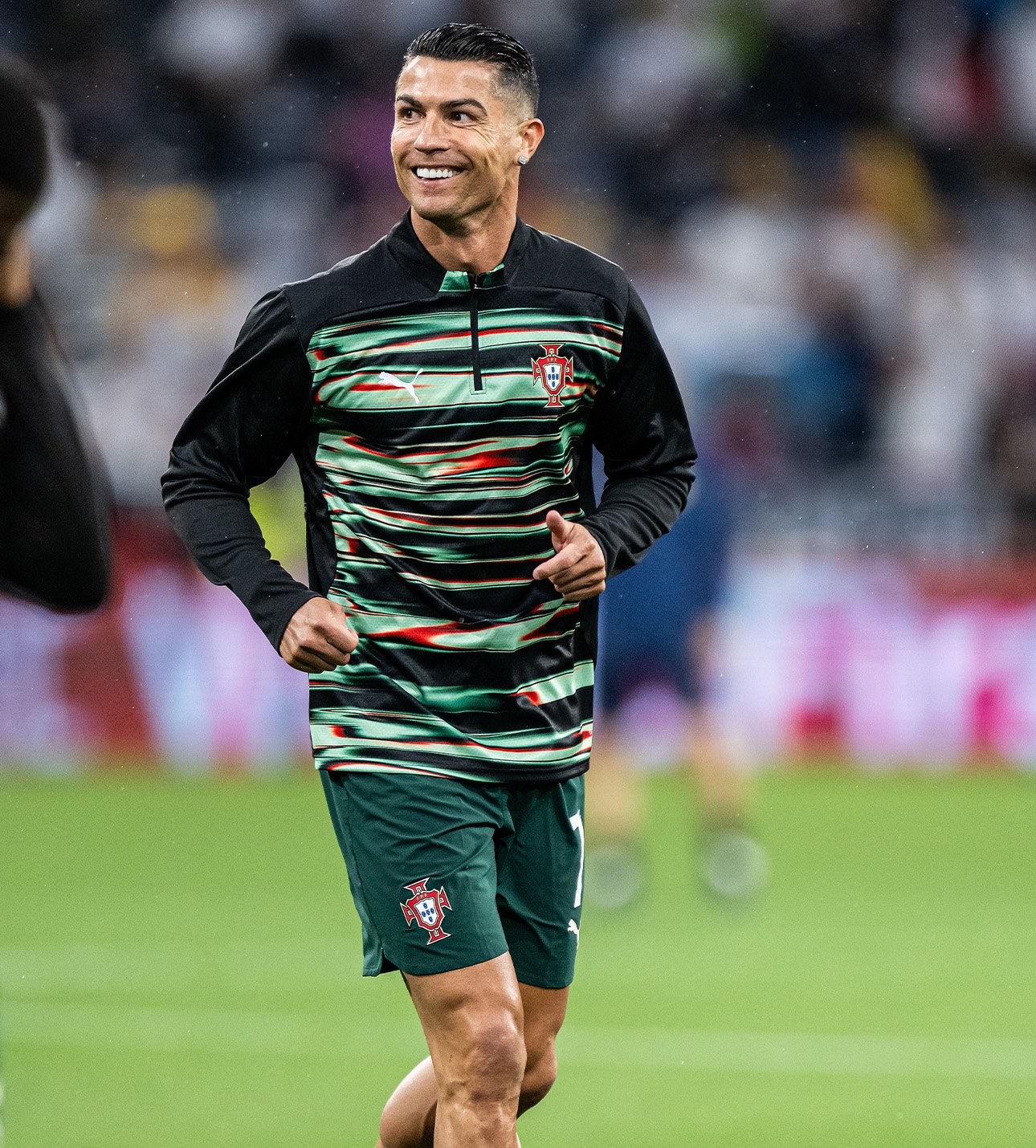
His talent is undeniable. His achievements on the pitch just as much. With a lightning-fast right foot, he is feared—and loved by fans. Where Messi’s talent is expressed through an intuitive understanding of the game, Cristiano Ronaldo’s career is defined by willpower. By repetition. By control. And by a life distilled into a single question: How can I be better tomorrow than I am today?
Ambitionernes anatomi
Fra en beskeden opvækst på Madeira til en global stjernestatus har Cristiano Ronaldo ikke altid fulgt den nemme vej. Det har fra hans pure ungdom været den mest krævende, han fokuserede på. I dag, hvor han både er verdens bedst tjenende fodboldspiller og et af sportens stærkeste brands, står han som et paradoks: elsket og kritiseret, beundret og udskældt, men aldrig ignoreret.
Og nu kan han denne sommer som 41-årig spille sit – formentlig – sidste VM.
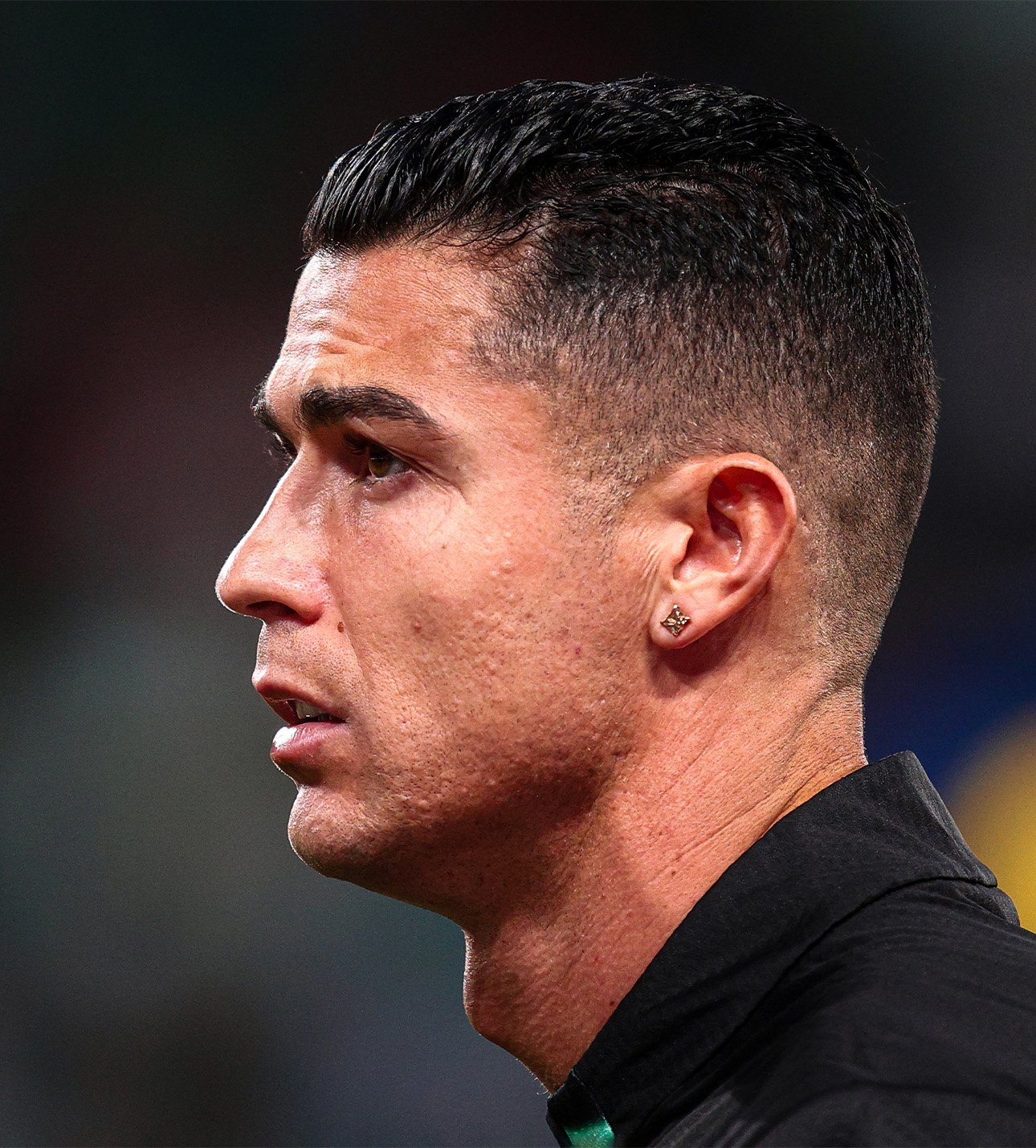
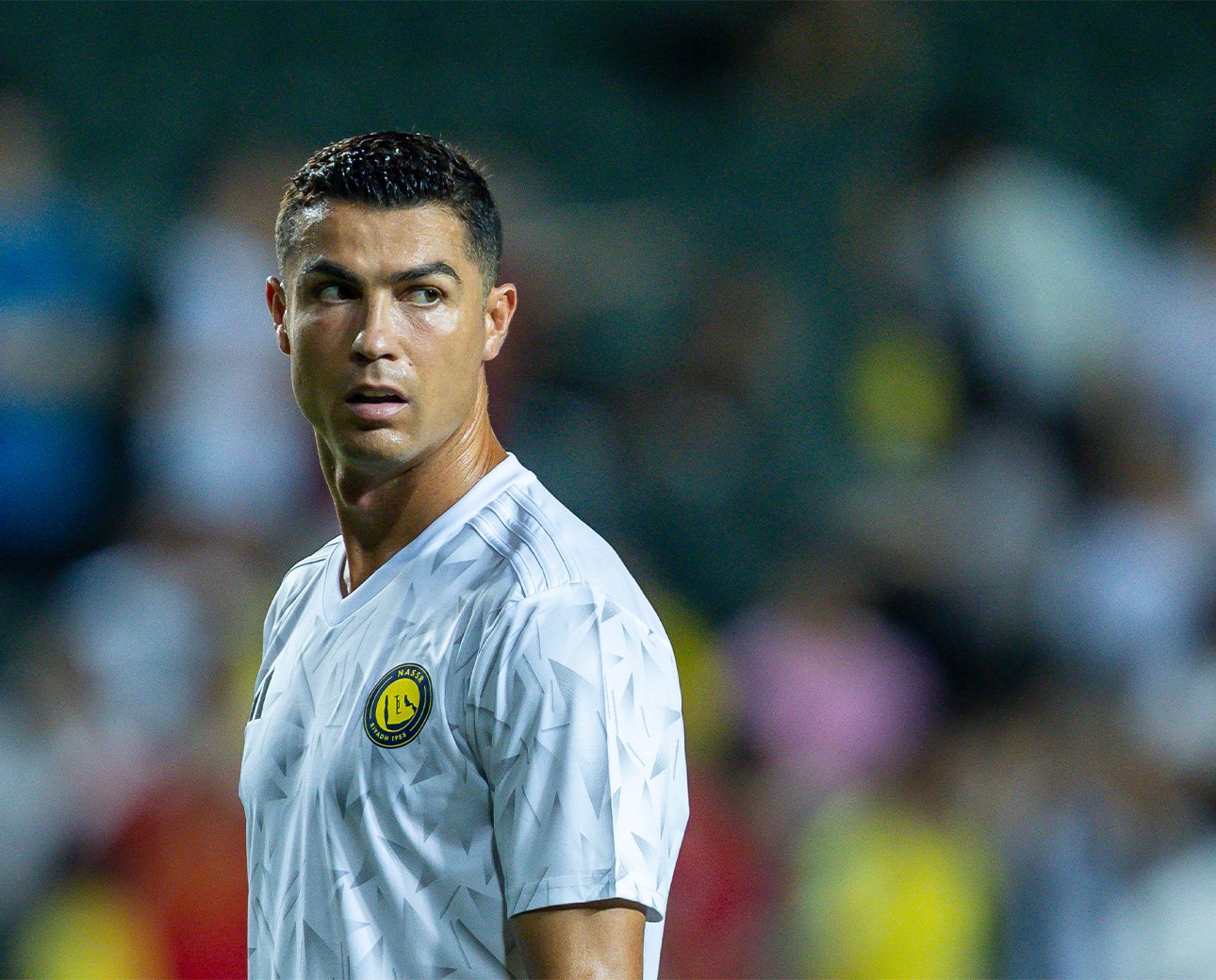
Over the years, he has made decisions that others might have struggled to justify. Such as when he chose-according to some critics-money over sporting ambition by signing with the Saudi club Al-Nassr. The fact that he also acts as an ambassador for a regime often criticized for its human rights record might have made others hesitate. But not Ronaldo.
At 41, his star status remains almost untouchable. And although even Ronaldo must acknowledge that his career as an active footballer is slowly drawing to a close, one goal still remains: to become the only player ever to score 1,000 career goals.
And it may come sooner than we think. According to the news agency Reuters, he had reached no fewer than 956 goals for club and country by the end of 2025.
“It’s hard to keep playing football, but I’m very motivated. Everyone knows what my goal is. I want to win trophies, and I want to score 1,000 goals. If I stay injury-free, I’ll get there within a year or two,” Cristiano Ronaldo told the agency.
It is a statement that, in many ways, encapsulates his career perfectly-driven by the ambition to be the best. In every aspect. And by an unwavering determination to make it a reality.
The story of Cristiano Ronaldo is, ultimately, a story about the anatomy of ambition. As he once put it:
“Every season is a new challenge for me, and I always aim to improve my game, score more, and provide more assists.”
This is a quote often attributed to an interview in the British newspaper The Guardian back in 2002, when Ronaldo was just 17 years old and still playing for Sporting CP in Lisbon. Over the years, however, it has been repeated in numerous newspapers and magazines focusing on his work ethic.
For Cristiano Ronaldo has never stumbled into his success. As he has said many times throughout his career: talent is never enough. You have to work hard for it.
Named after Reagan
Ronaldo grew up in a home where money was scarce, but discipline was a necessity. His father worked as a club assistant, his mother cleaned and worked as a waitress-and Cristiano learned early on that nothing came for free.
But he was born with a dream. A dream of success. And in fact, he was named after the American president Ronald Reagan, whom his father admired-not so much for his political views, but for his career as an actor. So when he was baptized in the Santo António church in Funchal-the main city on Madeira’s south coast—he was given the name Cristiano Ronaldo dos Santos Aveiro.
His first development as a player came at the local club Clube de Futebol Andorinha, where his father worked as a kit man. The talent was already evident in the eight-year-old Ronaldo, and shortly after, he signed his first contract with Clube Desportivo Nacional.
The price of his first transfer? Modest. It consisted of a football kit.
But the dream of a better life-free from financial hardship-was ingrained in him from the very beginning. And his father’s belief in his talent meant that, at just 12 years old, he was sent alone to the mainland to play for Sporting CP.
The homesickness was immense. But his time in Lisbon-and the sacrifices he endured-turned young Cristiano’s struggles into motivation.
Where many talents break during their youth, Ronaldo built his self-image around one idea: “I must become better than everyone else if I want to avoid falling behind.”
His teenage years led to a professional contract with the first team, where he played 25 matches in the 2002–03 season and scored his first three league goals.
A heart condition could have stopped everything
Even though everything pointed toward a future as a professional footballer, Ronaldo’s dream of success and wealth could have ended before it had truly begun. At the age of 15, he was diagnosed with a serious heart condition-tachycardia. A condition involving an abnormally fast resting heart rate, which can lead to dizziness, fatigue, shortness of breath, and heart palpitations. But after surgery, his heart rhythm was normalized-and just days later, he was back on the training pitch.
This setback was, and remained, just a small bump in the road—one that never shook the young Cristiano Ronaldo’s belief in his own abilities. It was also a time when others began to recognize his talent. Not least the Portuguese Football Federation, which selected him for the U15 national team, where he played nine matches and scored seven goals.
He would go on to represent every youth national team before making his senior debut for Portugal in 2003 at the age of 18, in a match against Kazakhstan.
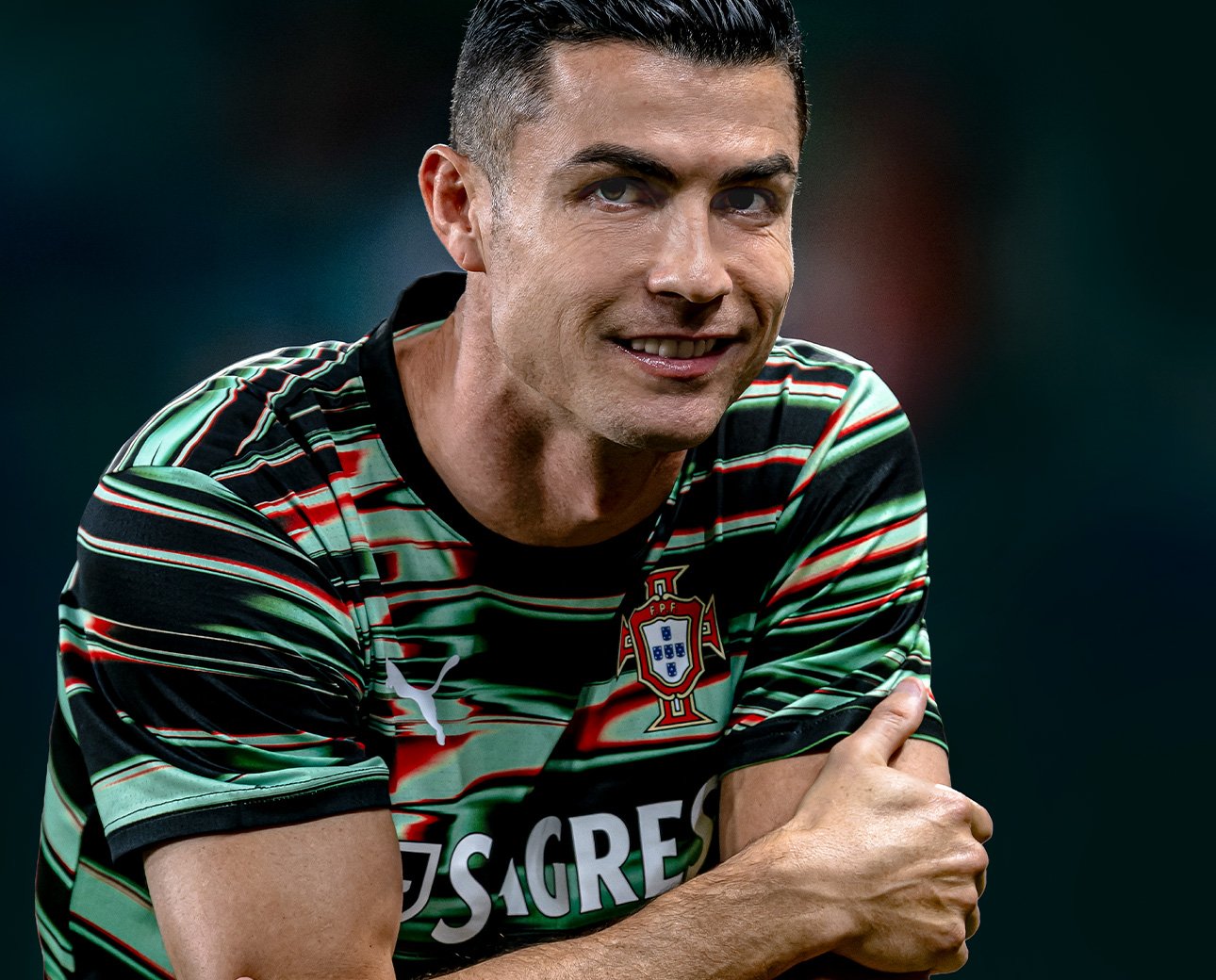
Today, the statistics speak for themselves: since his debut, he has played 226 matches for Portugal and scored no fewer than 143 goals. A feat few can match. And it’s not over yet. The 2026 World Cup in Mexico, the USA, and Canada will feature Portugal-and Cristiano Ronaldo in the squad. Likely his final appearance for the national team.
The Manchester United era
His breakthrough onto the biggest stage came at the age of 18, when he was spotted by Manchester United manager Sir Alex Ferguson.
In fact, Ferguson’s predecessor, Gérard Houllier, had already shown interest in Cristiano Ronaldo two years earlier—but believed he was too young and needed further development.
In 2003, Sporting CP faced Ferguson’s side at their new stadium, Estádio José Alvalade. The Portuguese side won 3–1.
The move to Manchester United marked the beginning of the club where he truly developed his talent. And in that process, Alex Ferguson played a decisive role. In many ways, he became a father figure to the young Cristiano Ronaldo. One episode in particular created a special bond between the two.
In 2005, Ronaldo’s father fell ill and was hospitalized. It affected him deeply. We all know the pressure Premier League players face—constant matches both in England and in international competitions. Still, Ferguson was quick to give his star player time off so he could visit his father.
In an article on Manchester United’s website, Cristiano Ronaldo recalled:
“He probably doesn’t remember it, but I’ll say it because it’s a beautiful story. One day my father was in hospital, and I was very emotional, very down. I spoke with him, and he said: Cristiano, go there for two or three days.”
Ronaldo’s father passed away in 2005 at the age of just 52, but Ferguson’s empathy created a bond between them—a deep loyalty that endures to this day.
The Duel
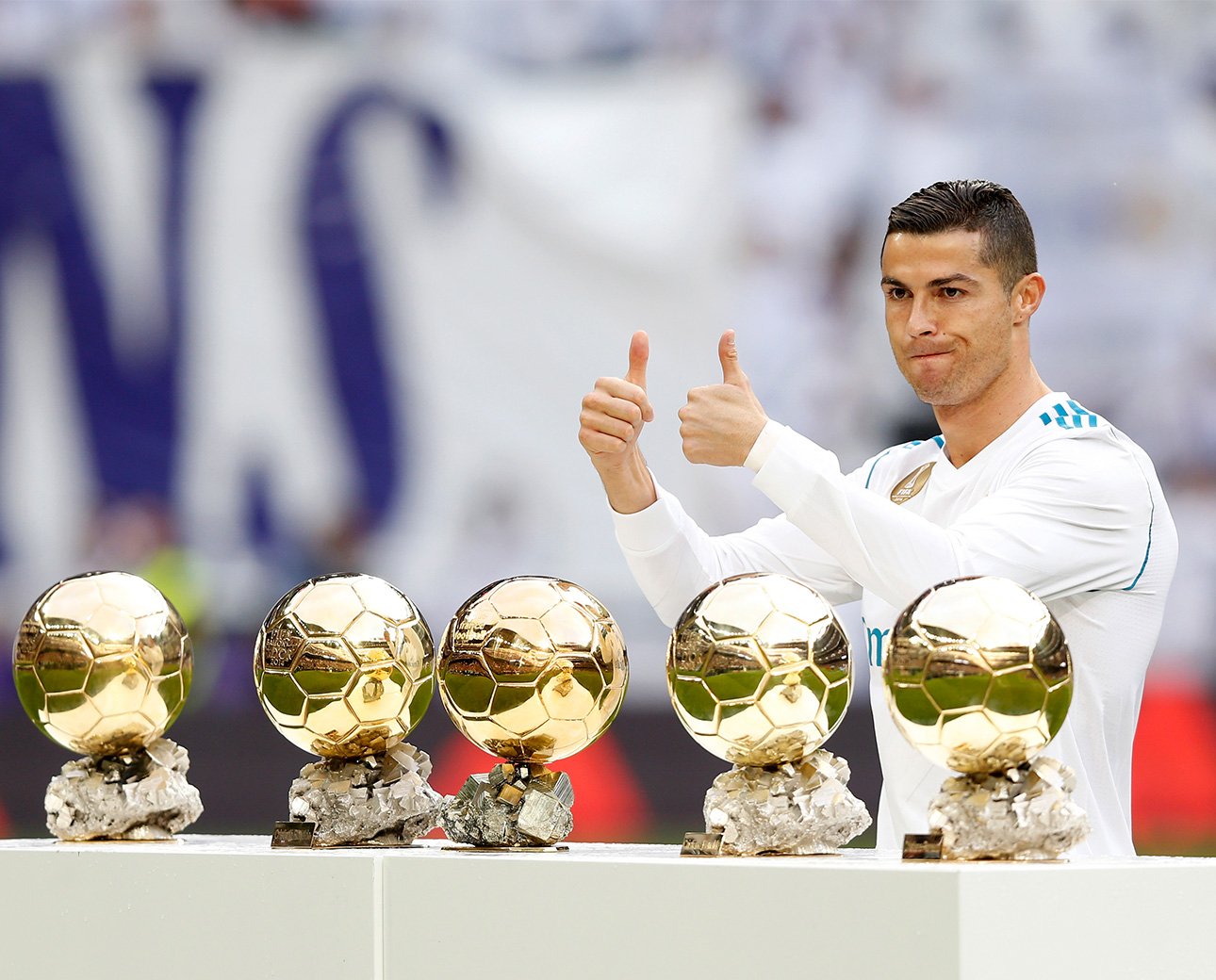
After six years—and 196 goals—he left England and moved to Real Madrid. It marked the beginning of a spectacular rivalry between two of the greatest footballers in the world: Cristiano Ronaldo and Lionel Messi.
Across both Spanish and international sports media, the two were constantly compared and measured against one another.
It was the perfect duel. Not only between the players themselves, but also fueled by the rivalry between the Madrid giants and FC Barcelona.
Often, rivalries are driven by deep mutual respect—sometimes even evolving into friendship. But that never happened with Ronaldo and Messi. Respect? Yes. Friendship? No.
“We are not friends. We have never had dinner together. But we are professional colleagues who respect each other. The rivalry is over now. We did what we had to do. I have love for him for that. I used to translate for him at award ceremonies because he didn’t speak English,” Cristiano Ronaldo told the football media OneFootball on his 40th birthday.
It was a duel between two superstars that captured global attention. Nine years of extraordinary football—and a rivalry that generated immense revenue through sponsorships and broadcasting rights.
The rivalry elevated them both. Without Messi, Ronaldo might never have pushed himself to such extremes. Without Ronaldo, Messi might not have been as relentless. And in many ways, Messi became the benchmark that kept Ronaldo striving. Together, they defined football’s last great rivalry.
But in 2018, it came to an end. Cristiano Ronaldo moved to Juventus, where he played 98 matches and scored 81 goals—once again proving his ability to dominate in a new league.
In 2021, he returned for one season at Manchester United, making 40 appearances.
At 38, he made the controversial move to the Saudi club Al-Nassr—a highly lucrative deal. Reports suggest his annual earnings are around $200 million.
The move sparked criticism. Many viewed it as an example of “sportswashing”—where states with questionable reputations and human rights records invest heavily in elite sports to improve their global image. Countries like Belarus have done so in tennis, and Saudi Arabia has hosted events such as the Spanish Super Cup, major golf tournaments, and Formula 1 races.
So far, however, it has had little impact on Ronaldo’s image. He continues to score goal after goal in pursuit of number 1,000—and the money continues to flow.
Manchester United was the laboratory. Real Madrid became the monument. Under Sir Alex Ferguson, Ronaldo learned structure, responsibility, and professionalism. In Madrid, he became historic: goals in industrial quantities, Champions League triumphs, and an iconic bond with the Santiago Bernabéu.
His time at Juventus cemented his ability to dominate yet another league, while his return to Manchester United revealed cracks—both in the club and the player.
Lifestyle: luxury with discipline
Ronaldo’s life is extravagant, but never accidental. Bugattis and private jets are part of his everyday life, alongside ice baths, sleep optimization, and meticulous diet plans. His luxury is not a sign of laziness, but rather a reward. This is where many misunderstand him. Ronaldo’s glamour is not an escape—it is the result.
Today, Cristiano Ronaldo is the highest-paid footballer in the world and has surpassed one billion dollars in total career earnings. Sponsorship deals, social media, the CR7 brand, hotels, fitness centers, and fashion have made him one of the most integrated business machines in sport. He is no longer solely dependent on his abilities on the pitch—he has built his own empire.
Cristiano Ronaldo will be remembered for his goals. But he should also be remembered for his method. For the idea that greatness can be constructed. That talent without discipline is meaningless. That ambition is a choice—every single day.
He may not be the most loved player in history. But he might be the most consistent.
Facts
Full name: Cristiano Ronaldo dos Santos Aveiro
Born : February 5, 1985, Funchal, Madeira
Height : 187 cm
Club career
- Sporting CP
- Manchester United
- Real Madrid
- Juventus
- Manchester United
- Al-Nassr
Honours (selected)
- 5 × Ballon d’Or
- 5 × Champions League winner
- UEFA European Championship winner with Portugal (2016)
- Over 850 official senior goals
Economy
- World’s highest-paid footballer (annual earnings)
- Over $1 billion in total career earnings
- CR7 brand: fashion, fragrance, hotels, fitness
Personal
Partner: Georgina Rodríguez
Children: 5
Wedding: Planned (not officially announced)