





For thousands of years, humans have relied on wood—as both a source of energy and a building material. But over the past 100 years, wood has been pushed aside by brick, steel, and not least concrete. Now, researchers predict that wood is once again on its way back to a leading role in construction.
Simple living
The phenomenon emerged in the United States in the 1990s. Idealists and environmentalists turned their backs on city life and moved into nature. There, they built small homes far off the beaten track-constructed from wood and furnished with only the essentials: a bed, a table, a toilet, and a source of heat. Often a wood-burning stove. Today, the movement has a name: simple living-and its homes are called tiny houses.
The movement truly gained momentum after the financial crisis in 2008. Thousands of Americans lost the ability to pay their mortgages and found themselves without a roof over their heads. The solution was to move to places where living was cheaper-often on significantly fewer square meters. For many, this meant life in trailer parks, where the home is essentially a large mobile home with water and partial sewage connections.
Others chose a more radical break from their lifestyle. They built tiny houses of up to 45 square meters-small, modern homes with everything you need. Just on less space. And with a minimal environmental footprint.
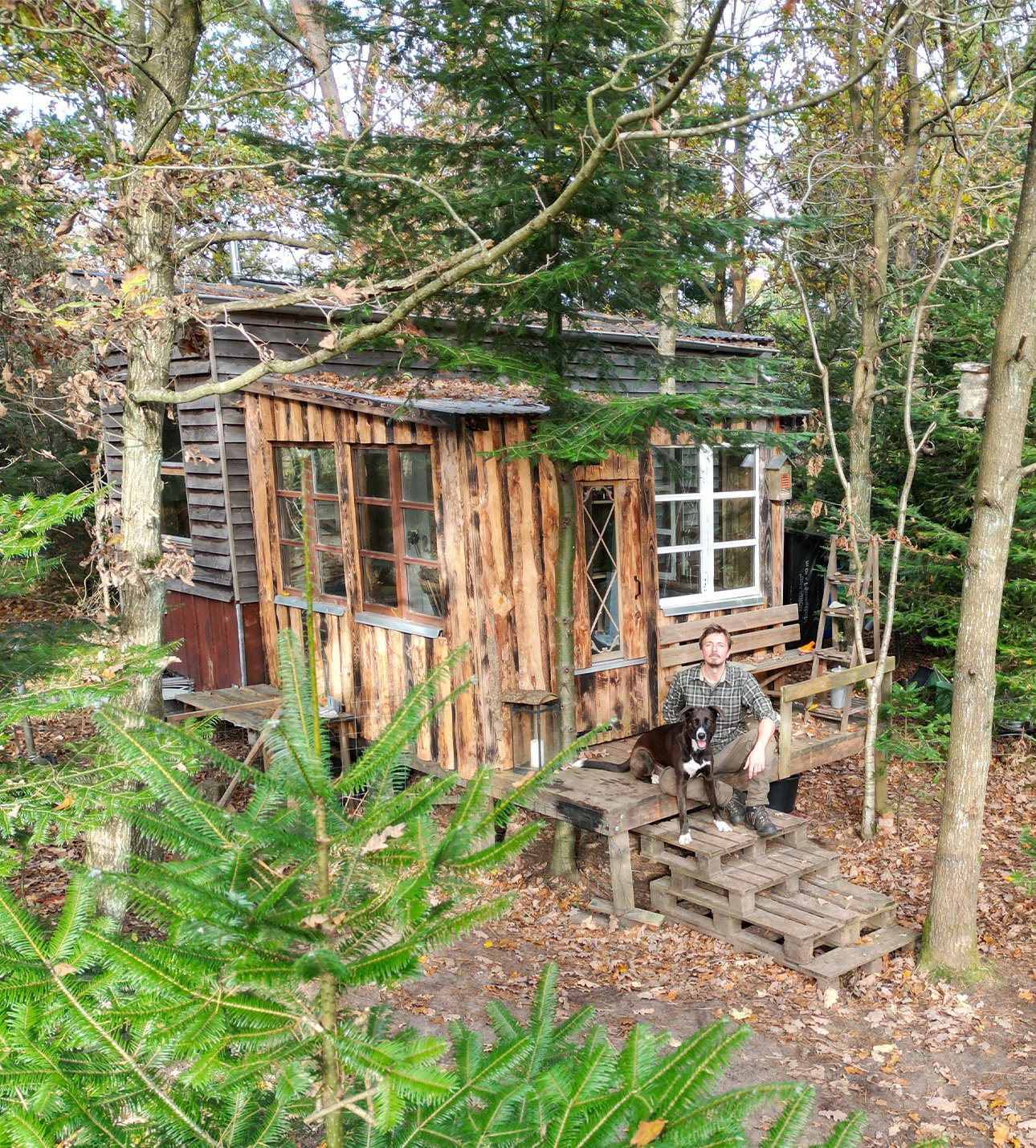
In Denmark, only a few people have made the move from apartments and suburban neighborhoods to a small wooden house in the forest. These homes are often built on wheels, making them relatively easy to relocate when the need for change arises. Many rent a small plot of land from a farmer or a forest owner.
That’s what Anders Boisen did. In the beginning, he lived in just 14 square meters in a forest on Djursland. Six years ago, he was living a completely ordinary life in Aarhus, with a full-time job and an apartment.
“I have a strong desire for freedom-it’s just part of my nature. I like being unbound, financially as well,” he said in Anne Glad’s podcast Du kender typen.
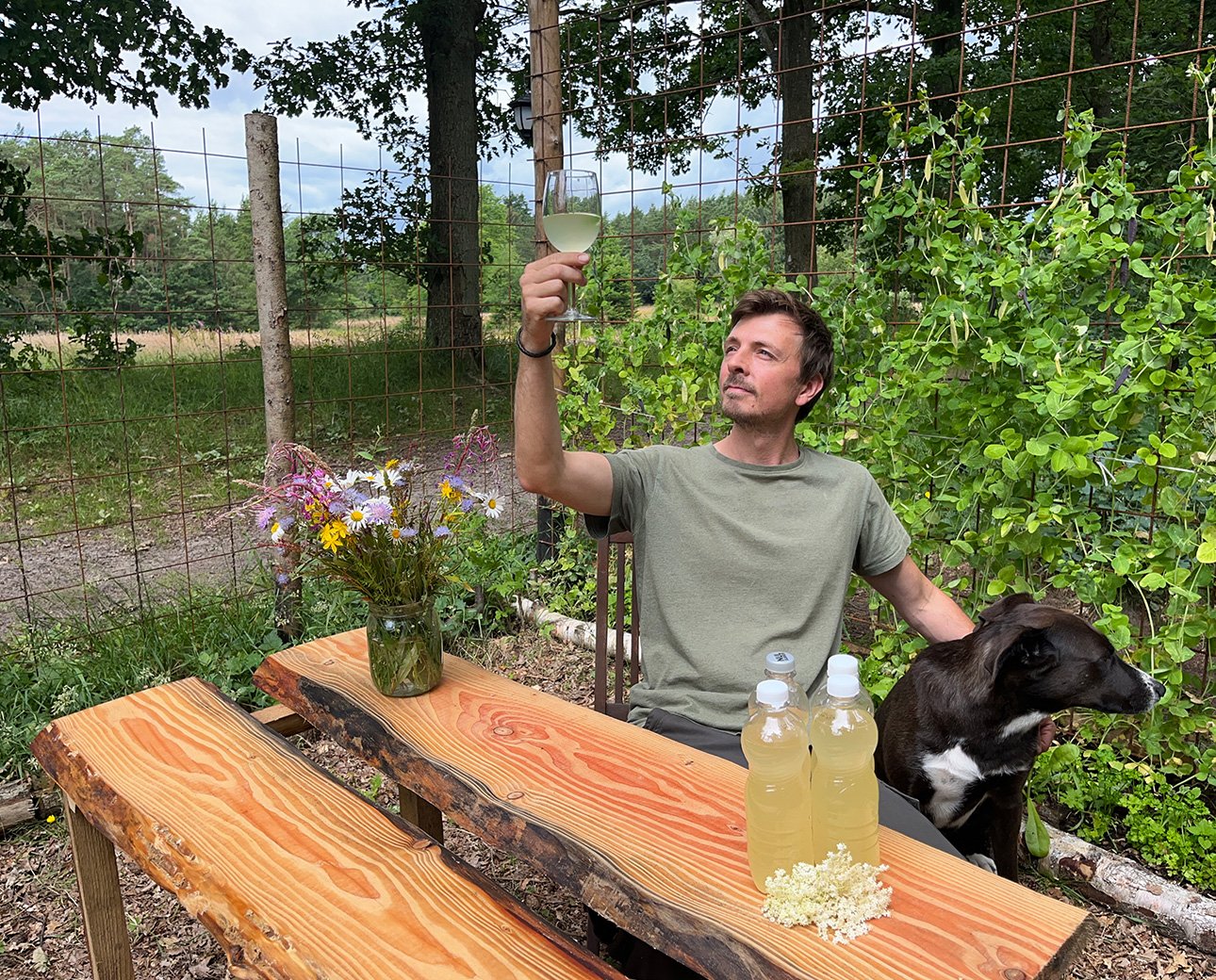
For Anders Boisen, the tiny house lifestyle is about freedom, lower consumption, and a smaller environmental footprint—but not about living ascetically. Today, he makes a living by producing videos about his life in the forest, where his days are spent on building projects, growing food, and writing. He has also published the book Living Small, Living Well. In addition, he gives talks about life in a tiny house.
Today, his 14 square meters have nearly doubled, ensuring there is also space in the future for both a dog and a partner.
Growth spurt
According to Statistics Denmark, Danish homes have grown significantly over the past 100 years. In the 1980s, we had an average of 49 square meters per person. Today, the figure is around 60. At the same time, the detached house has grown from approximately 120 square meters in the 1960s to more than 200 square meters today.
However, rising housing prices and climate concerns are prompting more people to reconsider how much space they actually need. This has created a new market. Because while living in a small space requires smart solutions-fold-out tables and beds that disappear into the wall-tiny houses are not synonymous with poor comfort. On the contrary, good design and a high quality of life are often part of the package. Just on a smaller scale.
Anders Boisen lives off-grid, without electricity, running water, or sewage. That said, it is not a requirement for living small. Many tiny houses are fully modern homes-scaled down to 30–45 square meters. The challenge is often getting them approved in accordance with local zoning plans and municipal regulations.
For thousands of years, wood has been humanity’s primary building material. Only after World War II was it truly overtaken by concrete and brick. But the climate crisis has once again brought attention to the strengths of wood.
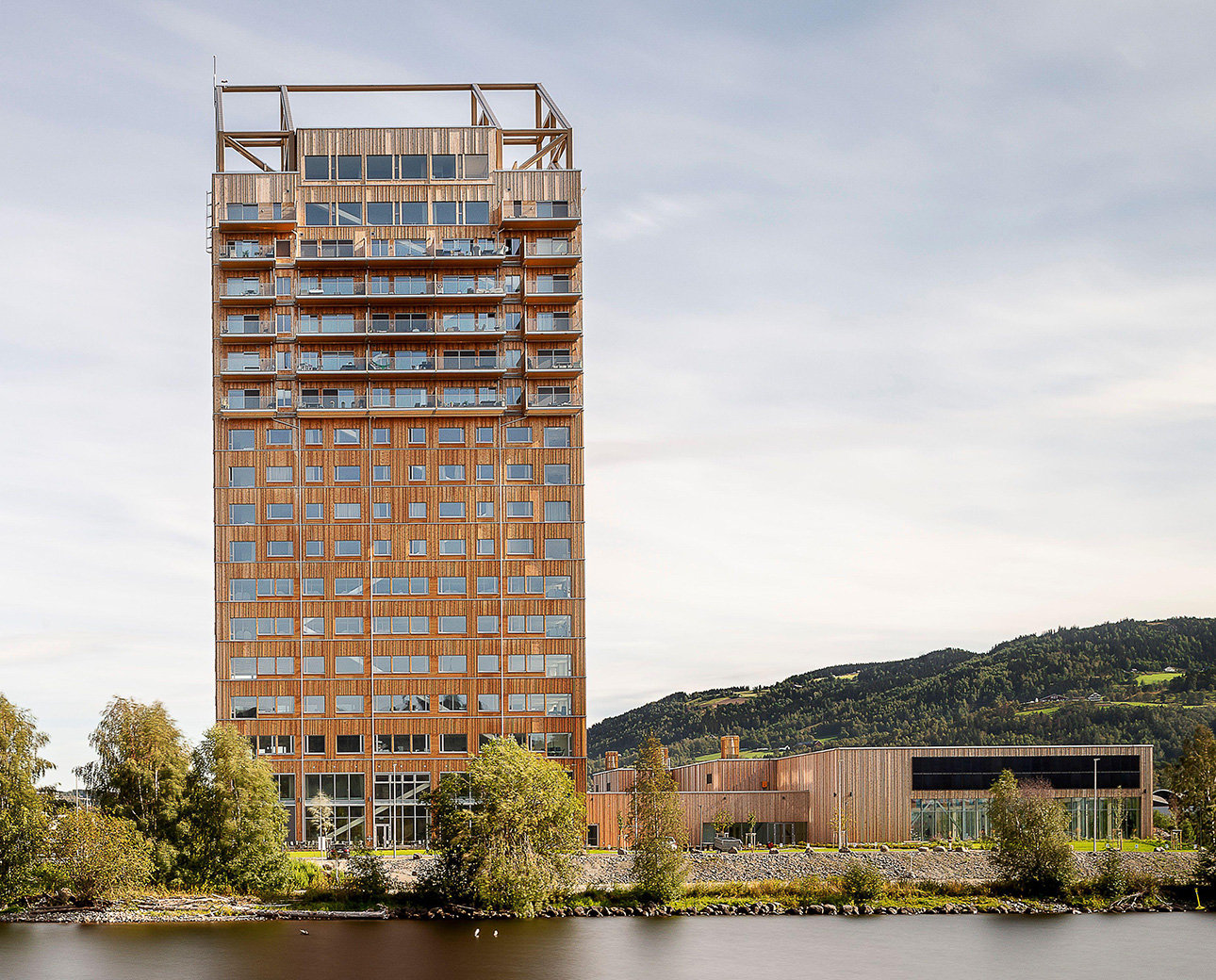
In Norway, the concept has been taken to new heights with the construction of an 18-storey wooden high-rise. The 85-meter-tall building overlooking Lake Mjøsa required around 14,000 trees. The building includes apartments, a hotel, offices, a restaurant, and a swimming pool-and was completed in 2019.