





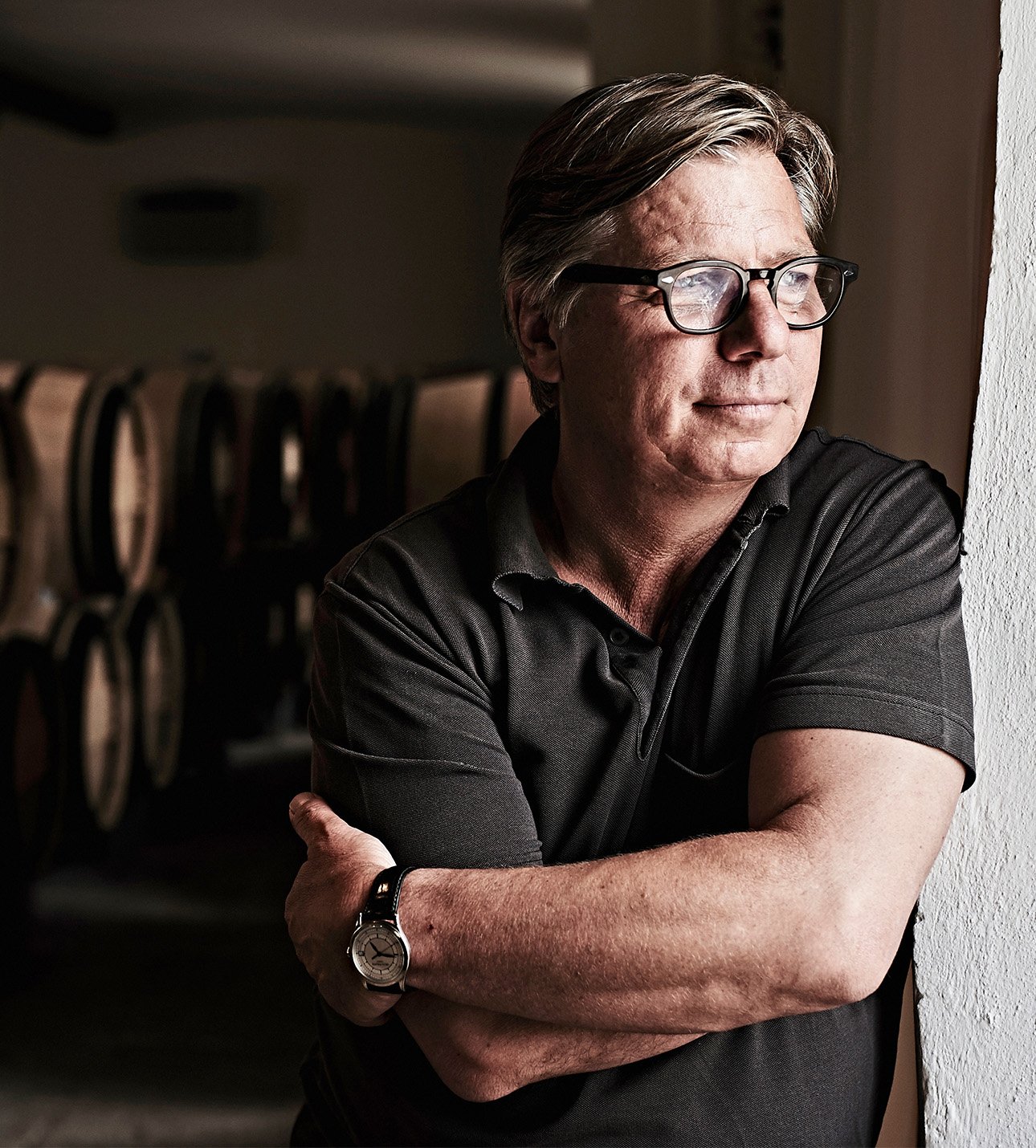
WINE GURU. MAGICIAN. A dear child has many names. And PETER SISSECK, 63, has no shortage of praise attached to his name. Put simply, his work as a winemaker over the past 40 years has brought him to a position where he is now regarded as one of the world’s most influential winemakers.
In vino veritas
Hand on heart: it’s not cheap if the glass is to be filled with a star wine from Dominio de Pingus. This is probably as close as we get to a true cult wine – a wine whose best vintages can easily approach DKK 10,000 for a single bottle.
Although it may be possible, at a well-stocked wine bar, to buy just a single glass, it is still a hefty price. But if the experts are to be believed, there is method to the madness. The master of wine critics, Robert Parker, already described the wine in 1996 as “one of the greatest and most exciting young red wines I have ever tasted.” And that was that. On a 100-point scale, he awarded it 96–100 points. At the time, this was the highest score a Spanish wine had ever achieved. And what’s more, it was only a barrel sample from a wine that had not yet fully matured that he was allowed to taste.
The 1995 vintage of Pingus marked the starting gun for a fairytale journey for a relatively unknown young Danish man. Peter Sisseck, originally from Hørsholm, north of Copenhagen, had already written himself into history at the age of just 33. The first vintages sold like hotcakes, and with the great interest came serious prices.
A shipwreck north of the Azores in the Atlantic caused prices to rise dramatically, as 75 cases of the 1995 Pingus vintage were on board. The price was originally set at $200, but the loss of the 450 bottles pushed the price up to no less than $495 – or just under DKK 3,000 per bottle.
Since then, the price has moved in only one direction: upwards.
New times – new wines
Peter Sisseck has enjoyed phenomenal success, and he is a man on a mission. He seeks the truth in his wines. First and foremost, his vineyards in Ribera del Duero are planted with old vines that were originally planted nearly 100 years ago. The Tempranillo grape forms the backbone of his Spanish Pingus wines. In addition, the wine is produced according to both organic and biodynamic principles, entirely without fertilization. Finally, it is harvested by hand and carefully sorted so that only the very best grapes make it into the estate’s top wine.
But that is not the whole story. As he himself says, much has changed since he bought his first two plots in the village of La Horra 30 years ago.
“It is certainly not the same Pingus we make today as the one we created in 1995. If we made it in the same way, Pingus today would have an alcohol level of 20 percent, be very dark in color, and taste like a bad port wine. The climate has changed, and we have to change the way we grow wine,” says Peter Sisseck.
Basically, his vineyards in Spain are located quite high in the landscape, about 750 to 800 meters above sea level. This results in high daytime temperatures and cool nights. But global warming means that the wine ripens faster and changes in character.
Nevertheless, Pingus has managed to preserve its quality. It still receives top scores in blind tastings. Peter Sisseck is not overly worried about the climate challenges. The answer, he believes, lies in nature itself.
“Of course, global warming is a problem that we must address effectively. Even though heat itself is not the biggest issue for a winemaker, we are more exposed to dramatic and extreme fluctuations in weather. While Denmark has seen long periods of drought and warm weather, Spain has experienced heavy rainfall with major flooding,” he says.
“So we obviously need to focus on our CO₂ emissions. But when it comes to wine, it may be even more important that we understand that the wine ripens faster. This also means that our wines change, among other things because sugar levels increase or decrease in line with changes in the climate.”
Some winemakers try to meet these challenges by seeking higher-altitude vineyards, up to 1,500 meters above sea level. But for Dominio de Pingus, that is not the answer.
“We are already located relatively high and take advantage of climatic differences. I believe more in looking at the genetic properties of the vines. With a generally warmer climate, the wine ripens faster, but it also takes on a completely different expression. It therefore has to be handled differently and perhaps blended in a different way to still achieve the balance in flavor that characterizes a modern wine.”
This philosophy, he believes, aligns well with the changes we see among consumers.
“Not many years ago, it was the rich, full-bodied and somewhat robust wines from the Rhône Valley that were in vogue. Then it was Burgundy wines, followed by rosés, and finally white wines. That is the development we seek to meet by creating wines that may be lighter in expression, harmonious and well balanced. As a contrast to the over-complexity that characterizes some young wines with an excess of sulfur, acidity, and sugar. I am looking for lightness of expression without too much tannin. Wines that are typical of the place where they are grown.”
For Peter Sisseck, part of the secret behind his wines lies underground, in the terroir. His Spanish vineyards are located in a limestone-rich area that helps give the wine its character. Knowledge of the subsoil is absolutely crucial to the quality and flavors he is able to cultivate in the wine he produces.
“The terroir in which you grow your wine is decisive. Two plots can lie side by side, yet the expression in the grapes can be vastly different, depending on soil conditions, drainage, and weather.”
The mission
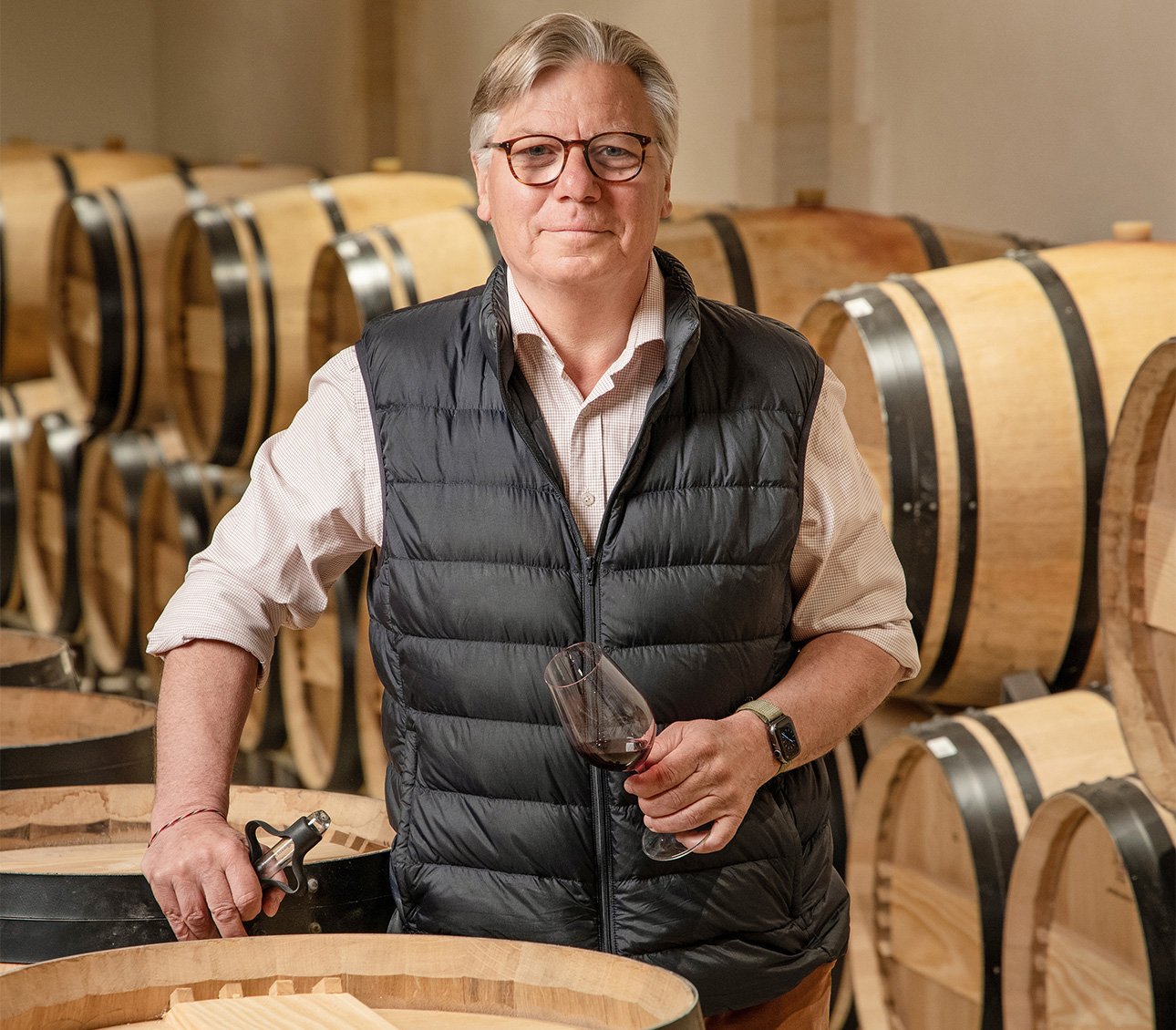
Cultivating wine organically and according to biodynamic principles, and doing so without artificially pushing yields higher, is a philosophy Peter Sisseck has sought to spread among other winemakers in the region. He has done so, among other things, by purchasing their grapes at a fair price. This has resulted in the wine PSI. The name is a combination of Peter Sisseck’s initials and the collaboration with local growers who have embraced these cultivation methods and refrained from planting new vines.
The result is a full-bodied wine without being overly powerful, with a generous fruit character. Initially, like Pingus, the project was based exclusively on the Tempranillo grape. In the most recent vintages, however, the wine is made with 10 percent Garnacha to keep the tannins in check. This is yet another example of the need to adapt winemaking to climate change. The grapes are therefore harvested earlier in order to preserve the wine’s natural freshness.
Not least, it is a wine that is priced within reach, even for those without a particularly deep pocket.
The French connection
As a slightly school-weary teenager, Peter Sisseck was introduced to the world of wine by his uncle Peter Vinding-Diers, who had worked with wine production around the world. But it was in France that he truly took Peter under his wing. It was also here that the name Pingus emerged as a nickname.
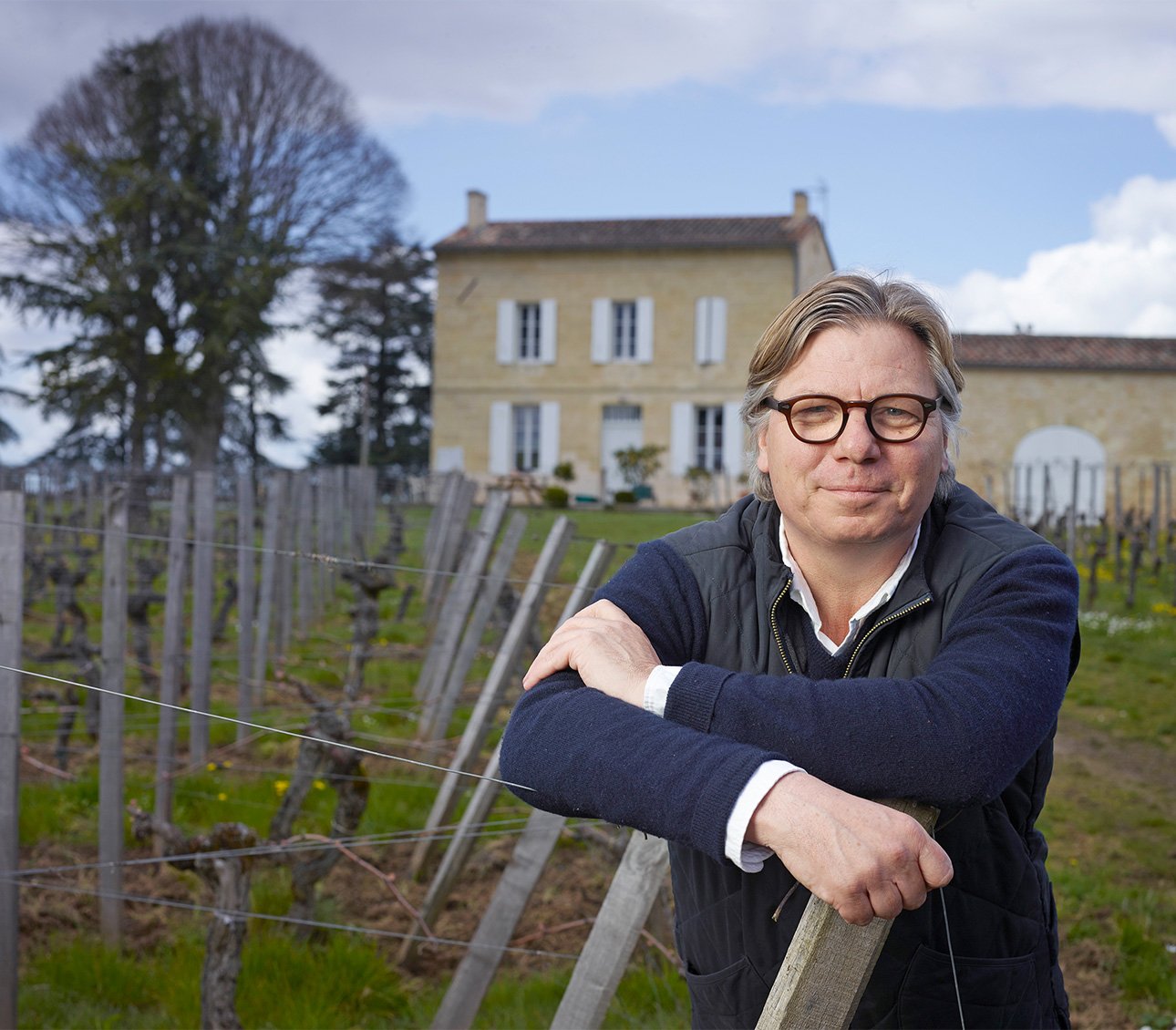
In 2010, Sisseck returned to Bordeaux, more specifically to Château Rocheyron in Saint-Émilion. Here too, it was a combination of ideal soil conditions and climate change that enabled him to produce a wine that achieves top scores in blind tastings.
“Geographically speaking, Château Rocheyron is located in a part of Saint-Émilion that can almost be described as a French Siberia. The climate is cooler here, but with rising temperatures and a limestone-rich subsoil, it is ideal for creating a more modern interpretation of classic Bordeaux wines.”
Returning to France was a natural continuation of Sisseck’s work in creating great wines. Dominio de Pingus remains his primary focus. “But it was in France that I received my education, both under my uncle and through hands-on practice as an oenologist. Moreover, the period around 2010 marked something of a turning point. We had created Pingus. We had already launched the PSI project in 2006. And Robert Parker stopped tasting and writing about wine. It was the end of an era. So when Château Rocheyron came up for sale, it didn’t require much deliberation.”
According to Sisseck himself, Bordeaux needed to be shaken up, to be awakened from its Sleeping Beauty slumber. And his ambitions remain sky-high. The quality of Château Rocheyron is to be elevated significantly. The goal is for the flagship wine to earn the designation Grand Cru Classé. The wine is well on its way. However, when the rules were changed in 2022, blind tastings of ten vintages became a requirement before a new classification can be granted, meaning this can happen no earlier than 2032.
Sherry – the latest project
In 2017, Peter Sisseck embarked on a new project, this time in southern Spain. More precisely in Andalusia, where almost all wine production revolves around one thing: sherry.
“But it may also be the wine region in the world that has experienced the greatest decline in both quality and reputation. Andalusia holds a special place in people’s hearts. The home of flamenco, people living in some of the most beautiful cities, almost like a great collection of Spanish kitsch. But super authentic,” says Peter Sisseck.
Sherry as a brand has been neglected. Many people imagine a creamy, sweet grandmother’s drink when offered a glass, or something used solely in English period dramas from the 19th century. But sherry can be so much more. According to Sisseck, it is an overlooked classic and a perfect companion to both savory and sweet cuisine.
Here too, he has selected vineyards of exceptional quality, with subsoil that supports the development of the remarkable flavors that a proper sherry can offer. Sisseck’s sherry is a fino, a wine blended from several different vintages using a so-called solera system. This consists of three layers of sherry casks, where the lowest level contains the oldest wine, the wine that is bottled. These casks are replenished with wine from the next level, which in turn is filled from the top layer. It is a process that takes years before the labels bearing the name Viña Corales can be affixed to the bottles.
Peter Sisseck’s sherry is yet another example of the care he brings to the creation of great wines. This is not where compromises are made. Instead, for more than 30 years, he has relentlessly and passionately sought the truth in the world of wine.