




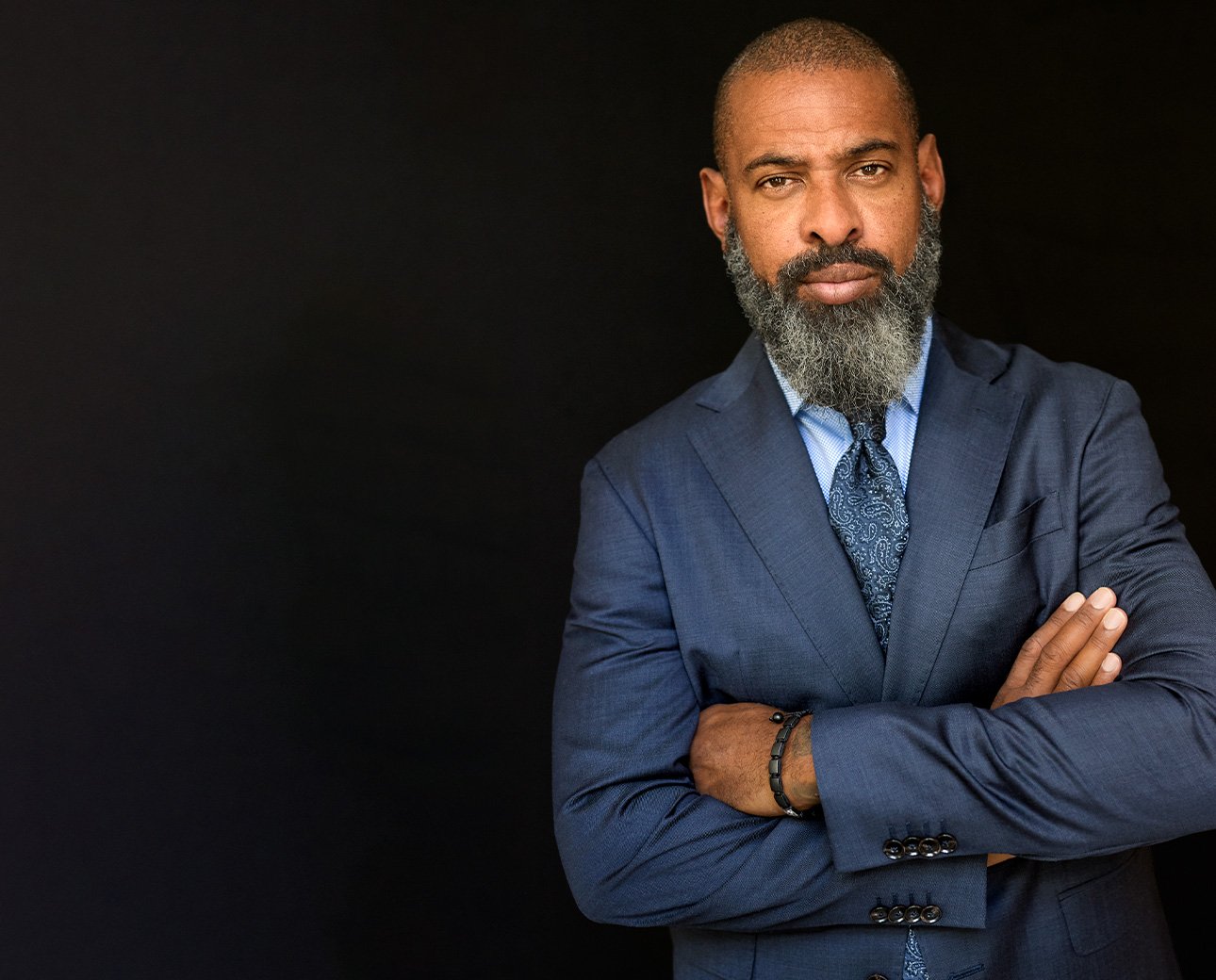
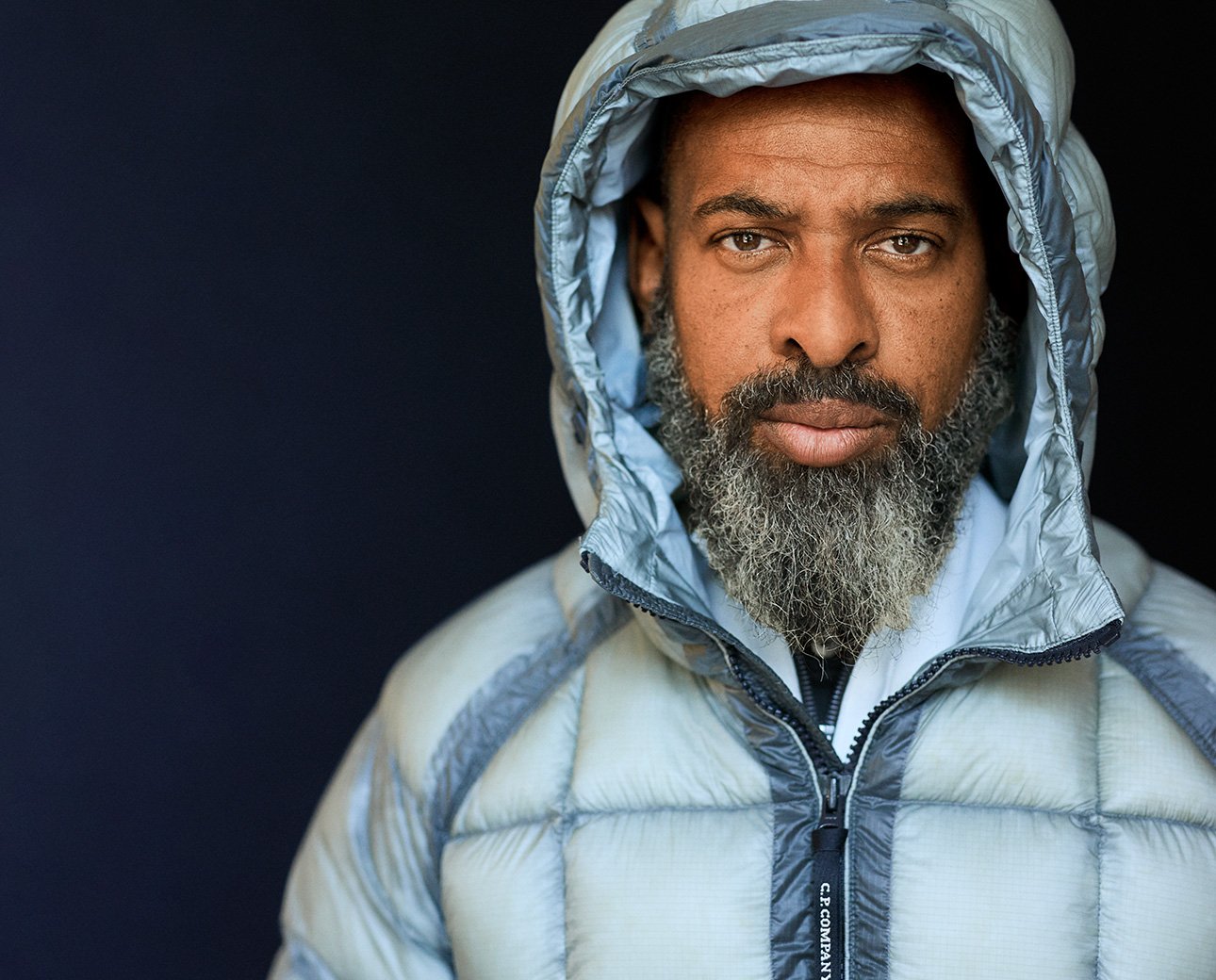
From Superliga bad boy to grandfather. From his debut until the day he hung up his football boots, he has been on a wild journey. From a life of noise and drama, gambling and ruling the nightlife scene, his rough edges have gradually been smoothed out. And he has found an inner calm, often accompanied by a good glass of champagne.
The Football Expert
Football has been an inescapable part of David Nielsen’s life. From the first time he laced up his football boots at Skagen IF to today, where he is part of TV 2’s regular team of football pundits. He had the talent. And as a youth player in the 1990s, he was a regular member of the extended squads for Denmark’s youth national teams. He also went on to sign a number of professional contracts in the Danish Superliga, Germany and England. But the major breakthrough never quite came. In terms of goals, his most successful years were probably his time at FCK, where he was the club’s top scorer for three consecutive seasons with a total of 36 goals.
“It was a different time. Back then, people like Preben Elkjær were the ones I looked up to. Not least because of his fondness for having a beer and smoking a Prince cigarette after matches. We would go out and party hard whenever we had time off as well. That simply wouldn’t happen today,” says David Nielsen.
And it was also a time when a young David Nielsen did not limit himself to a beer and a cigarette when he was out enjoying the nightlife. In short, he was something of a gambler, wagering large sums of money. Nor was he afraid to experiment with recreational drugs such as cannabis. In general, he enjoyed the freedom that suddenly came with being a professional footballer. Perhaps inspired by the English football millionaires who spent thousands upon thousands in nightclubs and expensive restaurants.
His first contract with Odense Boldklub in 1993 may not have put millions in his bank account. But it gave the 17-year-old David Nielsen enough money to go out and chase the big win at the bookmakers. Not to mention that he suddenly discovered women. As a professional – and, not least, physically fit – footballer, he was attractive. He was also a young man who would not shy away from a fight if there was reason for one.
But having strong opinions – or being unable to keep them to yourself – is a challenge that today might require a professional spin doctor or an entire team of influencers to keep the worst criticism at bay. David Nielsen had no such support in his younger days.
And he learned that speaking your mind can have consequences. In 2008 – as his playing career was drawing to a close – he wrote the book Sorte svin together with Jonas Ankersen in an attempt to put it all behind him and perhaps begin a new chapter in his life.
“It was quite simply an attempt to get to the other side. To put my years as a footballer behind me. From the beginning of my professional career, when I was only 16 or 17 years old, it had been a wild time. Now it was time for something new.”
While other football books written by former star players might, at best, have enjoyed a brief moment of popularity under the Christmas tree, David Nielsen’s book received extensive media coverage. And there were consequences. The book is a tour de force through scandals, cheating and the grey areas of football. A story about a culture in which players have to navigate written and unwritten rules, relationships with teammates, money and loyalty.
It is a book that has helped shape the story of David Nielsen. Even if, today, he is perhaps slightly weary of journalists constantly pulling the book out of the archives and building stories around it. But in any portrait of David Nielsen, it is impossible to ignore.
In particular, his account of his thoughts ahead of a decisive match between AaB and FCK in the penultimate round of the Superliga caused controversy. A defeat for AaB and David Nielsen could help the Copenhagen club win the championship. David Nielsen went onto the pitch with the clear intention that AaB should lose the match. First and foremost, it would mean a substantial bonus of DKK 300,000 and the opportunity to play in that year’s UEFA Cup. But only if FCK won the championship.
The match ended 1-1. FCK later won the championship. And AaB would play European football. David Nielsen received his bonus for his contribution that season, even though he had entered the match intending to lose. Following the publication of the book, the case was considered by the Danish Football Association’s ethics committee. However, it found no grounds for sanctions, as there had been no concrete agreements between the clubs, coaches or players.
That was not the book’s only consequence. In another chapter, David Nielsen describes a different side of his temperament: a physical assault on his AaB teammate Allan Gaarde. Frustration and disagreements culminated in an outright fight. The detailed description of the incident also led the police to reopen the case, resulting in a 20-day suspended prison sentence in the district court.
At the time – in 2008 – David Nielsen had returned to OB. But in the wake of the revelations, he was no longer welcome in the dressing room or on the pitch. Instead, he was loaned to Norwegian club Strømsgodset. The following year, he signed the final contract of his playing career with another Norwegian club.
Sorte svin comes across as an honest book in which David Nielsen does not hold back. Perhaps not the whole truth. But enough to present a different picture of football culture from the polished version usually portrayed. He could undoubtedly have embellished the story. But that would hardly have fitted his self-image. Some questions, however, he leaves for the reader to answer. The title, for example.
“Sorte svin? Well, people can decide for themselves what it means. In the world of football, the expression can mean many things. It is something we players and spectators have sometimes shouted at referees. It could also be a reference to my skin colour and the abuse that has been directed at me in stadiums. Or something else entirely.”
But perhaps the title also contains a hint of self-awareness. As he writes in the book: “I’m a bastard on the pitch, and my skin colour is more black than white. There’s nothing wrong with calling things what they are. Sorte svin. That’s it.”
New Success Beyond the Touchline
Regardless of the consequences and the considerable commotion surrounding the book, it marked the end of his career as a player. And although the media and football fans revelled in the stories of gambling and nights out costing DKK 140,000, not every door in the football world was slammed shut.
Instead, coaching became his new arena. It required a different David Nielsen from the man who, with his elbows held perhaps a little too high and a clinical left foot, had spent the previous 14 years as a professional footballer, gambling and partying until well into the morning.
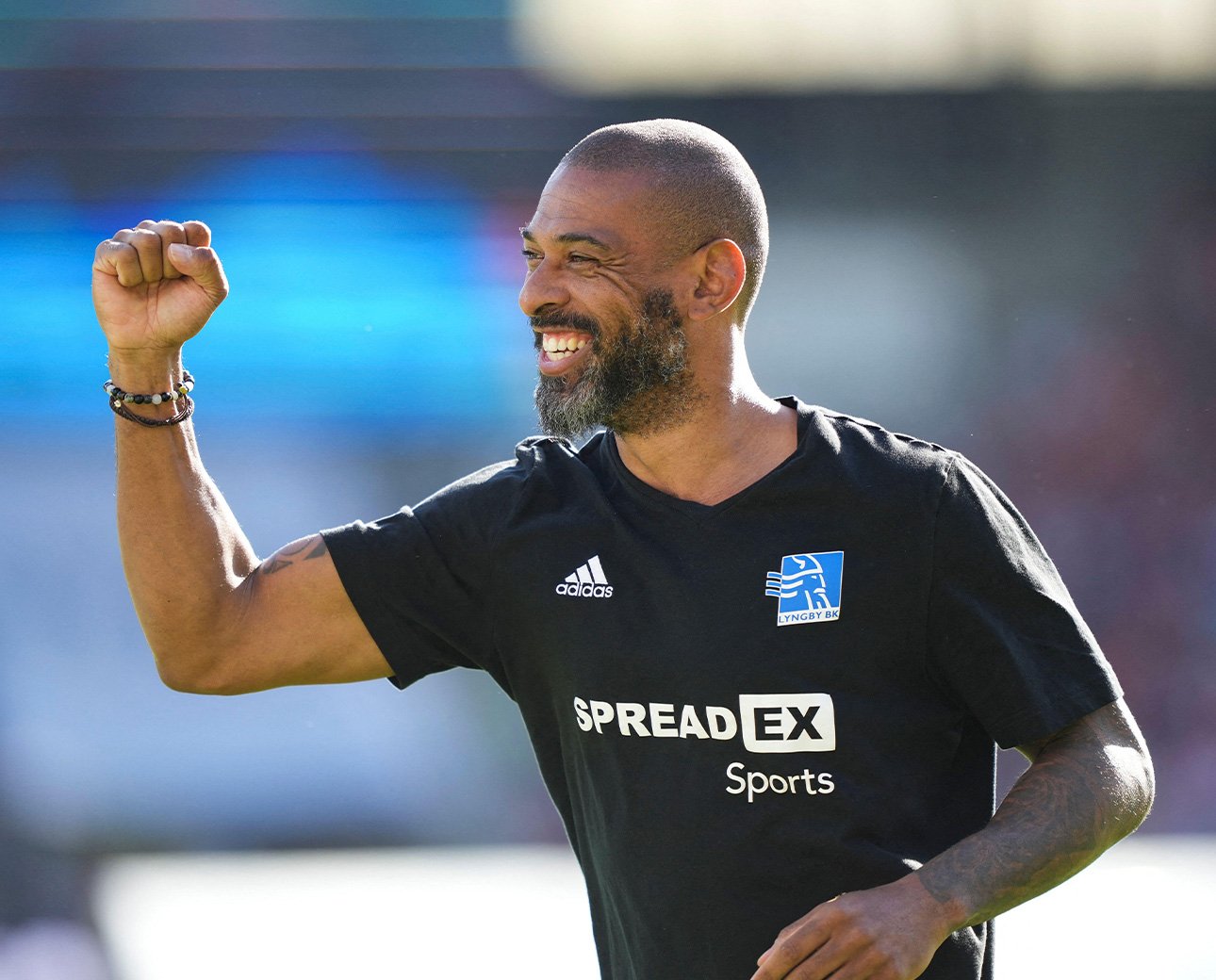
First as an assistant coach at Norwegian club Løv-Ham, then as head coach at Nest-Sotra and Strømsgodset. But after four years in Norway, it was time to return to Denmark. Since the 2000s, Lyngby Boldklub had lived something of a yo-yo existence in Danish football, with regular spells in the 1st Division. In 2015, the club approached David Nielsen to become its new head coach, tasked with instilling confidence and belief in the future among the players.
It was a remedy that worked. The very next year, the club secured its return to the Superliga. And even more importantly, in its first season back among Denmark’s 14 best football teams, Lyngby managed to win bronze medals in 2017.
What truly transformed the team was perhaps David Nielsen’s ability to draw on his own experiences as a player at various clubs and create a renewed belief in the future. A belief that the team could win – and function as a united whole. A team that radiated courage, energy and determination.
Another part of his philosophy was that a strong team and good results depend on unity in the dressing room. Friction had to be eliminated. It was all about creating a sense of togetherness.
It paid off. The team was transformed. Until the following year, when it was relegated to the 1st Division.
“Footballers operate in a competitive environment. But when the competition takes place on equal terms, each player feels seen and is better able to work on his own development. It also makes things easier for the coach. A player who feels secure finds it much easier to accept a verbal dressing-down after a terrible match. Others might need a pat on the back and some good advice.”
More Bronze with “De Hviiie”
For David Nielsen, however, coaching was a new and highly stressful role. It was no longer just about tactics and meticulous training drills. Man-management, team spirit and being fit for fight on match days became the top priorities.
It was a transformation – naturally supported by the results – that attracted attention throughout Danish football. So much so that AGF also came calling. Like Lyngby, AGF had struggled to maintain its position near the top of the Superliga. And perhaps even more significantly, the club had not won a medal since 1997, when it finished third.
Once again, it was about instilling belief in the future. And once again, it was about using the principles he knew from his own playing days: courage, energy and confidence that the team could win even when everything was not perfect. In practice, it meant being uncompromising, pressing all over the pitch and dominating matches without necessarily having most of the possession. After 23 years, David Nielsen and AGF finally managed to end the club’s long wait when the team won bronze medals in 2020 – along with the opportunity to compete in European football. It was an achievement that brought tears to the eyes of even the most hardened AGF supporters. And an achievement surpassed only by the championship the club won this year after a 40-year wait.
But the momentum faded after the bronze medals. David Nielsen moved to Greek club Kifisia FC, where he spent one season before returning home in 2024. First to Lyngby – and later to AC Horsens. It became his final coaching job. At least for now.
Incidentally, it is striking that both AGF and Lyngby Boldklub followed an outstanding season with a poor performance the following year. After winning bronze in 2017, Lyngby were relegated from the Superliga again. And AGF endured a disappointing season after their bronze medals in 2020. According to David Nielsen, however, that may not be particularly surprising.
“First and foremost, you have to remember that in football, things fail far more often than they succeed. That means both coaches and players have to learn how to deal with adversity. A good season also typically means that a number of key players take advantage of the situation and move to new clubs. This year, AGF lost three key players in Patrick Mortensen, Henrik Dalsgaard and Felix Beijmo. That marks the beginning of a new hierarchy, where new and existing players have to come together and form a new unit.”
Loving His Role as a Pundit
“Being a coach is incredibly stressful. Training, matches, man-management, negotiations with new players. It takes its toll. So right now, I’m happy not to be actively involved with a club.”
After an early departure from AC Horsens midway through the season, he landed a job this year as a football pundit at TV 2. A role that has brought more calm to his life. And one that perhaps suits a man who turns 50 on 1 December.
“I’m surrounded by so many incredibly talented people who are passionate about what they do. It also means that I have more time for my family and friends. And to do things that have nothing to do with football.”
And one of the things that means everything to David Nielsen right now is his first grandchild, who was born in mid-August. Being able to catch a flight to Norway to visit his son and his family means a great deal to him at this stage of his life.
Incidentally, it is also thanks to his son that he has developed a great enthusiasm for champagne. His son – Noah Holm – has had football in his blood from birth and has, among other clubs, played for Norway’s Rosenborg. In 2022, he was loaned to French club Reims in the heart of the Champagne region, and that sparked something in David Nielsen.
“When Noah played in Reims, I went down to visit him very often. And in Reims, there is one thing people care about: champagne. I love the small organic producers who might only produce a few hundred bottles a year.”
So now that his son is back in Norway, David Nielsen has had to find himself a regular spot in Aarhus with a decent wine list.
As he approaches one of life’s first major milestones, David Nielsen can look back on his first 50 years with satisfaction. Of course, there are things he regrets. But as he says: “I hope every man has something from his youth that he regrets. And that he has grown wiser. Suddenly, you find yourself where I am now, as a new grandfather. I’m in a good place in my life.”